The same five dinners on repeat get tiresome, yet branching out often requires buying ingredients you’ll use once or learning techniques you don’t have time to master. The middle ground is finding new meals that use the proteins and staples you already keep stocked.
These high-protein dinners expand your rotation without requiring specialty shopping or complicated preparations. They use ground meat, chicken, eggs, and basic pantry items to create meals that feel different from your usual weeknight lineup.
Simple ingredients prepared in new combinations create the variety that keeps everyone interested without adding stress to already busy evenings.
Ground Meat Beyond Tacos
Ground beef and turkey work for more than the standard rotation. These preparations taste completely different from taco night.
Simple Meatballs: Mix ground beef with an egg, breadcrumbs or crushed crackers, parmesan, and Italian seasoning. Form into balls, bake at 400°F for twenty minutes. Serve with marinara and pasta, or plain with roasted vegetables and rice. The protein content stays high while feeling nothing like standard ground beef meals.
Unstuffed Pepper Skillet: Brown ground beef or turkey with diced onion and bell peppers. Add rice, canned tomatoes, and cheese. Everything cooks together in one pan, delivering the flavors of stuffed peppers without the effort of actually stuffing them. Ready in thirty minutes with ingredients you likely have.
Asian-Style Lettuce Wraps: Brown ground meat with garlic and ginger. Add soy sauce and a splash of rice vinegar. Serve in lettuce leaves with shredded carrots and cucumber. Feels like restaurant food using ground meat and basic produce.
Different Chicken Preparations
Chicken works beyond basic pan-frying when you know a few additional methods.
Chicken Salad Done Right: Shred rotisserie chicken or cook and dice chicken breasts. Mix with mayo, diced celery, grapes, and walnuts if you have them. Serve on lettuce, bread, or crackers. High protein, no cooking required beyond chicken preparation, tastes fresh and satisfying.
Sheet Pan Chicken Fajitas: Slice chicken breasts thin, toss with sliced peppers and onions. Season with cumin, chili powder, and salt. Roast everything together at 425°F for twenty minutes. Serve with tortillas and toppings. All the fajita flavor without standing at the stove.
Simple Chicken Soup: Sauté diced onion and carrots in butter. Add chicken broth and shredded rotisserie chicken. Season generously with salt and pepper. Add egg noodles or rice. Ready in fifteen minutes and provides substantial protein in a comforting format.
Egg Dinners Beyond Scrambled
Eggs work for dinner in forms beyond the basic scramble.
Sheet Pan Eggs: Beat a dozen eggs with milk, salt, and pepper. Pour into a greased sheet pan. Add diced ham, cheese, and whatever vegetables you have. Bake at 350°F for twenty minutes until set. Slice into squares. Feeds a family with minimal effort and high protein.
Egg Drop Soup: Heat chicken broth with a splash of soy sauce. Beat eggs and slowly drizzle into simmering broth while stirring. Add frozen peas or spinach. Serve with rice on the side. Takes ten minutes and provides warm, protein-rich dinner.
Simple Frittata: Sauté vegetables in an oven-safe skillet. Pour beaten eggs over them, add cheese, cook until edges set. Finish under the broiler for two minutes. Slice and serve with bread and fruit. One pan, high protein, looks impressive despite being straightforward.
Pork in New Forms
Pork provides variety beyond the standard chop-with-applesauce combination.
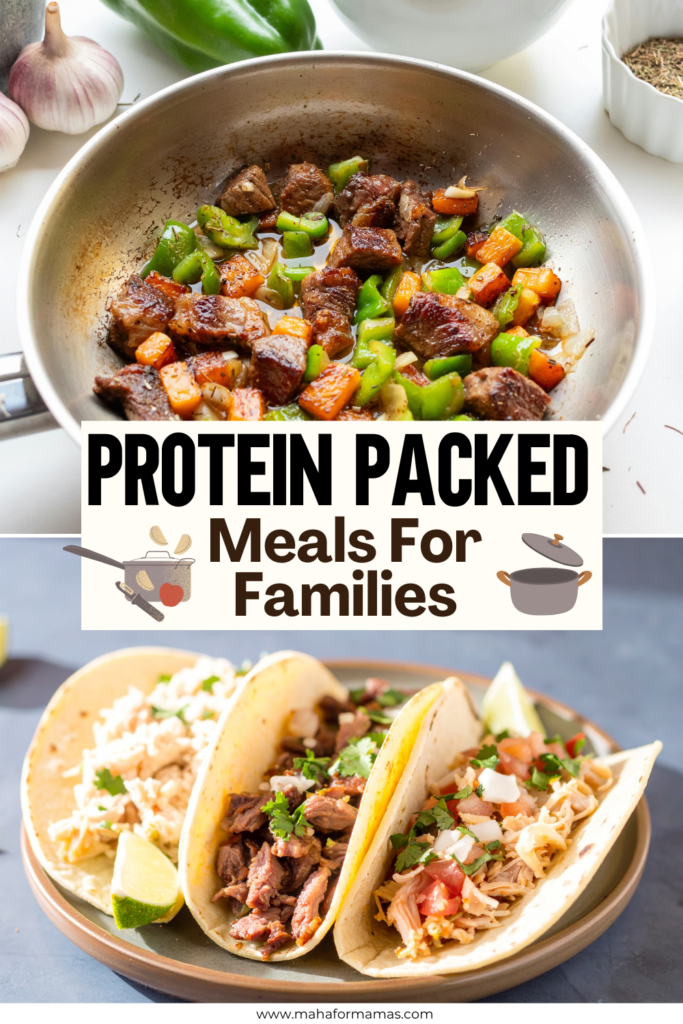
Ground Pork Stir-Fry: Brown ground pork, breaking it into small pieces. Add frozen stir-fry vegetables, soy sauce, and garlic. Serve over rice. Ground pork costs less than other stir-fry proteins and cooks faster than sliced meat.
Pork Tenderloin Slices: Slice pork tenderloin into medallions. Season and pan-fry in butter four to five minutes per side. Serve with mashed potatoes and green beans. Tenderloin cooks quickly and feels fancier than weeknight meals despite being simple.
Slow Cooker Pork Tacos: Season pork shoulder, add to slow cooker with salsa. Cook on low six to eight hours. Shred and serve in tortillas. The slow cooker does the work while you’re gone, delivering tender pork that tastes nothing like ground beef tacos.
Combination Meals
These dinners combine proteins in ways that create something beyond single-protein meals.
Sausage and Bean Skillet: Slice sausage, brown in a pan. Add canned white beans, diced tomatoes, and spinach. Simmer until spinach wilts. Serve with crusty bread. Both sausage and beans contribute protein while creating a hearty one-pan meal.
Chicken and Black Bean Bowls: Layer rice with black beans, shredded chicken, cheese, salsa, and avocado. The beans and chicken together provide substantial protein while creating a complete meal that tastes fresh and satisfying.
Ham and Cheese Breakfast Bake: Cube bread, layer in a baking dish with diced ham and shredded cheese. Pour beaten eggs with milk over everything. Refrigerate overnight, bake in the morning or for dinner. Makes breakfast-for-dinner feel special while requiring minimal effort.
Making High-Protein Meals Approachable
These meals work because they use proteins and ingredients you already buy, just combined differently.
Shop Your Usual List: Ground meat, chicken, eggs, sausage, basic vegetables, and pantry staples cover all these meals. You’re not adding specialty items—you’re using familiar ingredients in new ways.
Keep Techniques Simple: Every meal here uses basic cooking methods you already know—browning meat, roasting in the oven, or mixing and baking. Nothing requires skills you haven’t used before.
Allow Substitutions: Don’t have ground pork? Use ground beef. Missing peppers? Use whatever vegetables are available. These recipes work as frameworks, not rigid formulas.
Building Your Rotation
Introduce one or two new meals this week alongside your familiar standbys. Once they become comfortable, add another new option. Gradually you’ll build a rotation of ten to twelve meals that feel varied without requiring you to constantly experiment.
Most families do better with a solid rotation they cycle through than constantly trying new recipes. Find what works, repeat it often, and save experimentation for weekends when you have more energy and time.

Frequently Asked Questions
How do I know if my family will like these meals?
Start with options closest to what they already eat. If they like tacos, try lettuce wraps. If they eat chicken, try chicken salad. Introduce changes gradually rather than serving completely unfamiliar meals all at once. Most families adapt when new foods appear alongside familiar elements.
Are these actually high-protein or just regular meals?
Each meal centers on substantial protein—ground meat, chicken, eggs, or combinations. They provide twenty-five to thirty grams of protein per serving, which qualifies as genuinely high-protein. The focus on protein as the foundation rather than an afterthought makes these different from many family meals.
What if I don’t have all the ingredients listed?
Substitute freely. Missing celery for chicken salad? Skip it. Don’t have rice vinegar? Use regular vinegar. These meals work with substitutions because they follow simple patterns rather than requiring precise ingredients. Use what you have and adjust as needed.
How do I meal plan with these new options?
Add one or two to your usual rotation this week. Next week, try one or two more. Gradually build a collection of ten to twelve meals you cycle through. You don’t need twenty different dinners—you need enough variety to prevent boredom while maintaining meals simple enough to make regularly.
Expand Without Overwhelm
New high-protein meals for families don’t require shopping at specialty stores or learning complex techniques. They require looking at familiar proteins through a slightly different lens—seeing ground meat beyond tacos, chicken beyond pan-frying, and eggs beyond scrambling.
Start with one new meal this week. Make it using ingredients you already have or can easily grab at your regular store. See how your family responds. Add it to your rotation if it works, skip it if it doesn’t. Building variety happens gradually, one successful meal at a time.
Simple ingredients prepared in new combinations create the variety that makes weeknight cooking sustainable long-term without adding stress or complication to already busy lives.